Bean-Balls, Billy Evans and Ty Cobb’s Pitching Prospect — Baseball Features from May 1926
A devastating bean-ball alters Ralph Shinners’ career, Billy Evans defends pitching prospect Owen Carroll, and baseball writers examine the uncertain path from rookie sensation to major league survivor in May 1926.
Content from the DeKalb Daily News - May 13, 1926
In This Edition
-Bean-Ball Spoils the Career of Rookie Star
- Billy Evans Says
- FOHL FLINGER
Bean-Ball Spoils the Career of Rookie Star
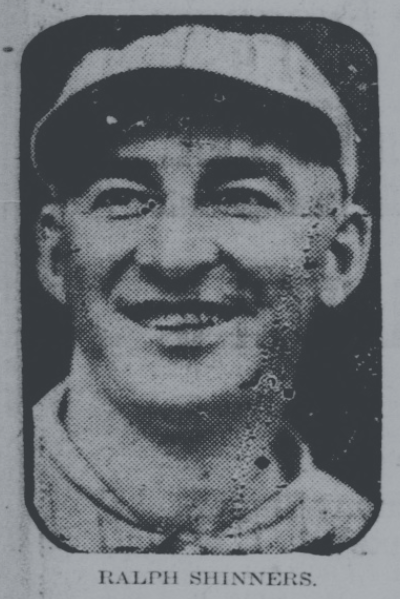
The bean-ball appears to have ruined the big league career of another promising youngster. The release of Ralph Shinners by the St. Louis Cardinals to the Oakland club of the Pacific Coast League adds another victim to the bean-ball, intentional or otherwise.
Shinners will be recalled as the price of the American association in 1921. With Indianapolis he had an average of .347, poled 50 doubles, 26 triples and 13 home runs, and was the leading base stealer in the circuit with 52.
Major league scouts immediately started the bidding on Shinners, but everybody fell by the wayside when John J. McGraw entered the scene.
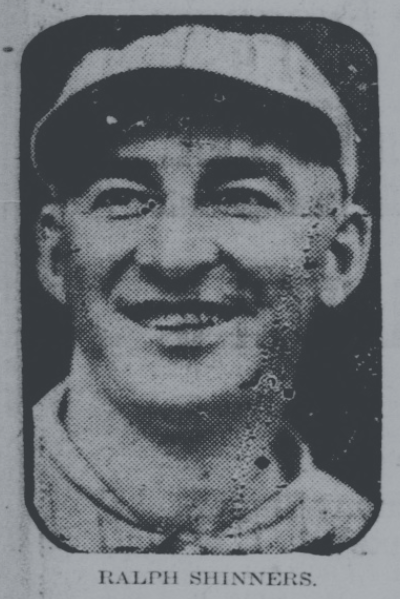
McGraw's bank roll usually makes the other fellows look like pikers and Shinners joined the Giants in the spring of 1922. In one of his early games Shinners was felled by George Smith, lean right-handed with the Phillies. They carried Shinners to a hospital and it was several months before he was ready for action again.
Returning to the Giants, McGraw detected the change in Shinners' stance and how he ducked the fast ball at the chin. The bean-ball had left its mark and McGraw sent Shinners to the Toledo club.
Among the bidders for Shinners during his term with Indianapolis was Branch Rickey, then manager of the St. Louis Cardinals. He scouted Shinners when with Toledo in 1924 and felt that Ralph no longer was shy.
Shinners was drafted by the Cardinals for 1925 but when he continued to back away at the plate against the right-handers he was used only against the southpaws. And even the southpaws shooed him frequently.
One season was enough to convince Rogers Hornsby that the bean-ball had seriously handicapped the big league career of another promising youngster.
k
Billy Evans Says
Highly Touted
No player in years has come to the majors more highly touted than Pitcher Owen Carroll, Holy Cross star.
When he joined the Detroit Tygers at Boston in June of last season, it was an event extraordinary. New England folks flocked to the ball-yard to see the young man in action.
As a college pitcher, over four years of play, Carroll had won something like 50 games and lost only two.
A big sensation in "Rah, Rah" circles, the supposition was that Carroll would stand the big league batters on their heads just as he did the collegians.
It so happened that I umpired the debut of Carroll as a member of the Detroit team in his so-called home town of Boston, also his first appearance at Detroit.
"They were flops," as they say in theatrical circles when an act fails to go over, as Carroll did not finish either game.
Big Handicap
While Carroll failed to go the route in his first two starts, I ventured the prediction that he was a great looking pitching prospect.
In a sense, Carroll's failure to get away to a good start in the majors last season might well be attributed to a matter of finance.
Feeling that Carroll should have a year of minor league experience, Manager Cobb consented to let him make his debut in Boston, a few days after he joined the club, rather than nurse him along for a number of weeks as is customary with recruit pitchers.
It was asking too much of Carroll to come through under the circumstances but, at that, he pitched as well as his team played behind him. The Tygers, anxious to help put the youngster over in Boston, didn't play up to standard.
About a week later he made his Detroit debut and it was no more auspicious.
However, both games were played to standing-room only, so that Carroll soon brought back at the gate much of the money that had been paid out for him.
Plenty of Courage
In some quarters the opinion was expressed that the rather forced starting of Carroll, which resulted in two defeats, might take some of his confidence and possibly ruin his career.
That thought never appealed to me. Carroll wasn't quite ready when he came to the majors. Pitching to big league batters for the first time, he had no knowledge of their weakness or strength.
Having plenty of courage, the severe test he had been put to, with accompanying failures, in no way handicapped Carroll.
"It is all so different up here," remarked Carroll to me after his second game. "It looks as if there is a lot to pitching that I still have to learn.
"The batters wait you out up here. They don't swing at everything that is near the plate, as do many of the college players, and, when they get you in the hole, they murder the cripple."
Going Great
This spring I watched Carroll for a couple of days with the Detroit Tygers at Augusta, Ga.
Manager Cobb had then practically decided that a year in some big minor league would give Carroll the polish he needed to be a major league star.
He was to be sent to the Toronto club of the International League. Catching for that team was the veteran Steven O'Neill, for many years the star backstop of the Cleveland Indians.
"What about Owen Carroll?" I asked Steven, valuing his opinion highly.
"He looks great," replied Steven. "Has a fine curve ball, a good fast one, and there is style to his every movement. He has the class, will make a great pitcher for Cobb."
Handed by O'Neill, the collegian Carroll won his first six starts in International League.
Which makes Manager Tyrus Cobb of Detroit smile blandly.Highly Touted
No player in years has come to the majors more highly touted than Pitcher Owen Carroll, Holy Cross star.
When he joined the Detroit Tygers at Boston in June of last season, it was an event extraordinary. New England folks flocked to the ball-yard to see the young man in action.
As a college pitcher, over four years of play, Carroll had won something like 50 games and lost only two.
A big sensation in "Rah, Rah" circles, the supposition was that Carroll would stand the big league batters on their heads just as he did the collegians.
It so happened that I umpired the debut of Carroll as a member of the Detroit team in his so-called home town of Boston, also his first appearance at Detroit.
"They were flops," as they say in theatrical circles when an act fails to go over, as Carroll did not finish either game.
Big Handicap
While Carroll failed to go the route in his first two starts, I ventured the prediction that he was a great looking pitching prospect.
In a sense, Carroll's failure to get away to a good start in the majors last season might well be attributed to a matter of finance.
Feeling that Carroll should have a year of minor league experience, Manager Ty Cobb consented to let him make his debut in Boston, a few days after he joined the club, rather than nurse him along for a number of weeks as is customary with recruit pitchers.
It was asking too much of Carroll to come through under the circumstances but, at that, he pitched as well as his team played behind him. The Tygers, anxious to help put the youngster over in Boston, didn't play up to standard.
About a week later he made his Detroit debut and it was no more auspicious.
However, both games were played to standing-room only, so that Carroll soon brought back at the gate much of the money that had been paid out for him.
Plenty of Courage
In some quarters the opinion was expressed that the rather forced starting of Carroll, which resulted in two defeats, might take some of his confidence and possibly ruin his career.
That thought never appealed to me. Carroll wasn't quite ready when he came to the majors. Pitching to big league batters for the first time, he had no knowledge of their weakness or strength.
Having plenty of courage, the severe test he had been put to, with accompanying failures, in no way handicapped Carroll.
"It is all so different up here," remarked Carroll to me after his second game. "It looks as if there is a lot to pitching that I still have to learn.
"The batters wait you out up here. They don't swing at everything that is near the plate, as do many of the college players, and, when they get you in the hole, they murder the cripple."
Going Great
This spring I watched Carroll for a couple of days with the Detroit Tygers at Augusta, Ga.
Manager Cobb had then practically decided that a year in some big minor league would give Carroll the polish he needed to be a major league star.
He was to be sent to the Toronto club of the International League. Catching for that team was the veteran Steve O'Neill, for many years the star backstop of the Cleveland Indians.
"What about Owen Carroll?" I asked Steven, valuing his opinion highly.
"He looks great," replied Steven. "Has a fine curve ball, a good fast one, and there is style to his every movement. He has the class, will make a great pitcher for Cobb."
Handled by O'Neill, the collegian Carroll won his first six starts in International League.
Which makes Manager Ty Cobb of Detroit smile blandly.
FOHL FLINGER
Former Washington Hurler Expected to Help Red Sox.
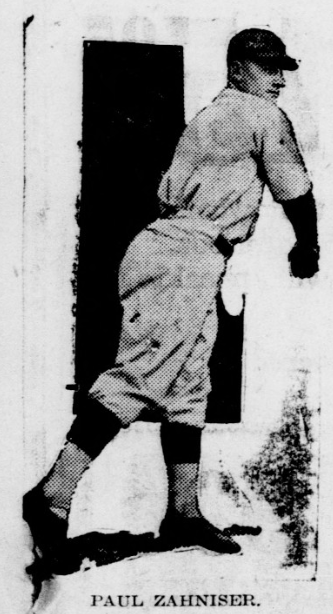
Former Washington pitcher, who is expected to prove helpful to the cause of the Boston Red Sox this season. Zahniser came to the Fohl team from the Senators a year ago after having served two campaigns with the Nats. He's been in professional basebal since 1918.