Miller Huggins Finally Gets His Due While Bob Meusel Heads to the Injured List
Bob Meusel's broken foot shakes the Yankees, the New York Daily News defends Miller Huggins, blasts Phillies owner Bill Baker, revisits baseball's funniest prank, and recaps a busy day around both major leagues.
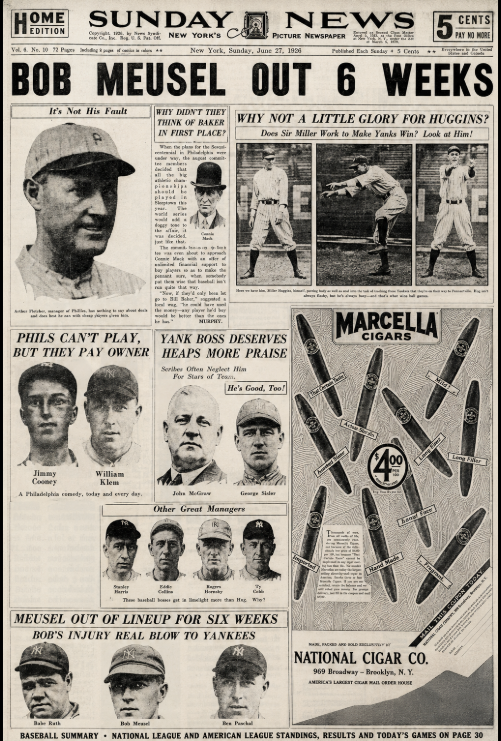
Content from the NY Daily News - Sunday June 27, 1926
In This Edition
- Meusel Out of Lineup for Six Weeks
- Rain Disappoints 25,000 Giant Fans
- Why Not a Little Glory for Huggins?
- Baseball Summary
- Phils Can't Play, But They Pay Owner
- Why Didn't They Think of Baker in First Place?
- Wot's Baseball Without Joke Now and Then?
- Aw, Kick It, Willya!
- Advertisements
MEUSEL OUT OF LINEUP FOR SIX WEEKS
BOB'S INJURY REAL BLOW TO YANKEES
Rain Prevents Last Game With Red Sox.
By MARSHALL HUNT.
Boston, Mass., June 26.—A drenching rain on the wings of a driving wind this afternoon prevented the Yankees from playing their final scheduled game in Boston.
Fenway park was filling rapidly when the rain began to whip into the stands and the depreciation of summer headgear was something scandalous.
The Yankees left Boston tonight for New York, where they will play one game with the Red Sox tomorrow.
Should Have Won Three.
The Yankees succeeded in winning two games out of three here and should have won the other, but some inferior playing in the eleventh inning resulted in a Red Sox victory.
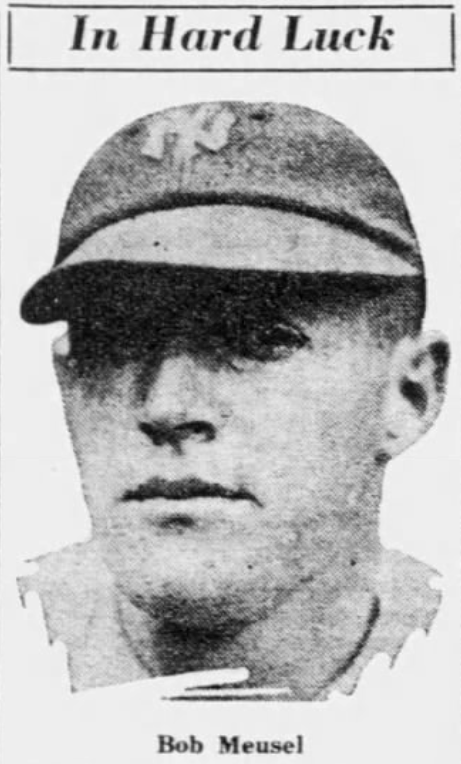
Bob Meusel, the Yanks' outfielder who suffered a broken bone in the left foot yesterday when attempting to steal second base, had the fracture set this afternoon in City hospital and hobbled off on crutches to the 5 o'clock train for New York.
Long Robert was the most downcast man in Boston today. Surgeons informed him for the first time that he will not be able to get back into the New York lineup for at least six weeks. Bob was hopeful of enjoying his best year in the major league. He was hitting well, fielding superbly and was leading the league in stolen bases.
Meusel explained today that he caught his spikes in the soil yesterday while avoiding spiking Second Baseman Doc Regan of the Sox.
Two Reserves.
Manager Miller Huggins has two reserved outfielders to alternate in Meusel's place, Ben Paschal and Roy Carlyle, but neither is the fielder that Meusel is.
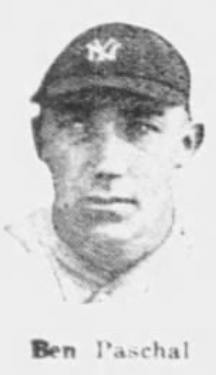
The other Yanks now will have to labor all the harder to maintain their healthy lead.
It is likely that Walter Beall or Myles Thomas will pitch for the Yankees tomorrow. On Monday they will begin a series with the Athletics in Philadelphia.
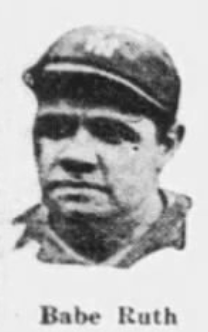
Today's rain was appreciated by at least one Yankee, the estimable Babe Ruth who has been playing gamely with a painful charley horse in his right leg, limping about the bases and in the outfield and suffering every time he took a swing at a pitched ball.
Doc Woods is working on the Bam continually and hopes to eliminate the charley horse soon.
Rain Disappoints 25,000 Giant Fans
Close to 25,000 fans were disappointed when rain washed out the doubleheader the Giants were scheduled to play with the Brooklyn Robins at the Polo grounds yesterday afternoon. Rain started shortly before game time, when over 15,000 were already in the stands, with thousands more on their way to the grounds. The Giants, therefore, will put in the leanest week-end, financially, of the season. Today is an off day and no exhibition will be played. Monday the Giants meet the Braves at the Polo grounds.
WHY NOT A LITTLE GLORY FOR HUGGINS?
Does Sir Miller Work to Make Yanks Win? Look at Him!
YANK BOSS DESERVES HEAPS MORE PRAISE
Scribes Often Neglect Him For Stars of Team. He's Good, Too!
By MARSHALL HUNT.
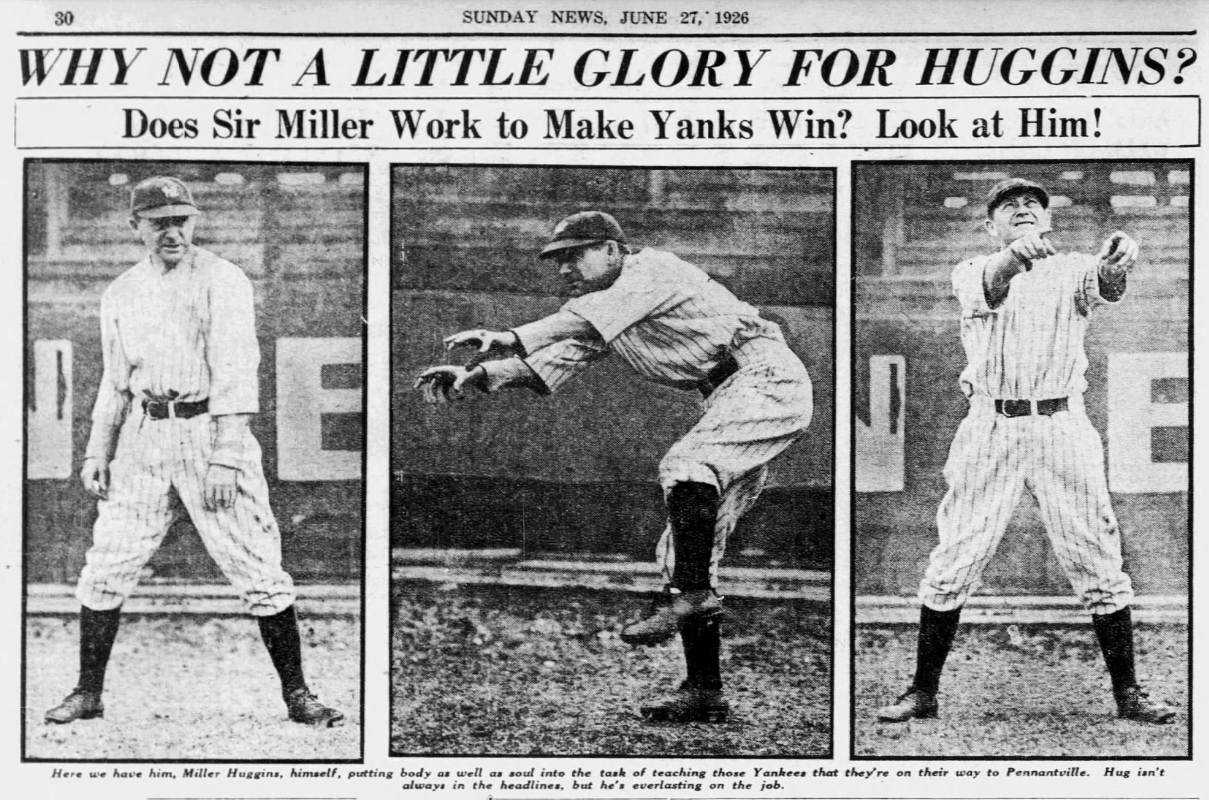
It strikes your correspondent that a chap named Miller Huggins ought to rate, if only occasionally, some of the salvos that are continually being discharged in baseball.
Twenty-one guns, of course, might be an exaggerated salute. Perhaps even the guard shouldn't be turned out for him. He deserves more, however, than a present arms or a hand salute.
The writer is at a loss to know exactly what sort of salute Mister Huggins is entitled to, but he believes that all left-over trumpeting which might go to waste otherwise, should be wrapped up into one noisy blast and presented to little Hug.
In the distribution of laurels Mister Huggins has been sadly overlooked.
It is quite time that something be done about it.
When the Senators win a series of games much of the credit is given Manager Stanley Harris. The newspaper boys will wax effusive and scribble something about the "resourcefulness of little Bucky in the crisis was admirable," or "again Manager Harris demonstrated he is one of the greatest strategists in baseball."
Like Their Bucky.
The managerial ability of the so-called "boy wonder" finds its place in nearly all stories written by the Washington scribes about their ball club.
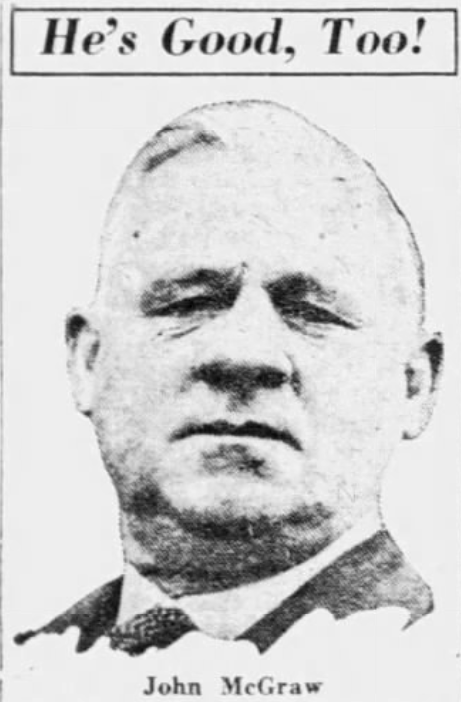
For years Manager John McGraw of the Giants has been known as the "Little Napoleon," "the Great Master Mind," "the Thinker," until one pictured Mr. McGraw ever assuming the posture of Rodin's famous statue while directing maneuvers of the Giants from the bench. Stories pertaining to McGraw's dominating personality if placed end to end would reach from Cairo to Spokane. His spirit, his personality, are said to permeate the entire team and not one move is made on the field unless he signals for it.
Jawn Gets Credit.
When the Giants win a series of games reference invariably is made to the smart way the victories were directed by McGraw.
"McGraw drove his Giants to another splendid triumph over the Pittsburgh Pirates yesterday," is a typical way of beginning a story.
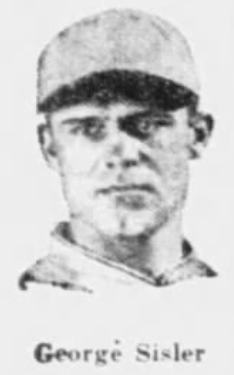
Connie Mack of the Athletics, Eddie Collins of the White Sox, Rogers Hornsby of the Cardinals, George Sisler of the Browns, Ty Cobb of the Tigers, Tris Speaker of the Indians, Dave Bancroft of the Braves and Wilbert Robinson of the Dodgers usually share some of the glory of achievement.
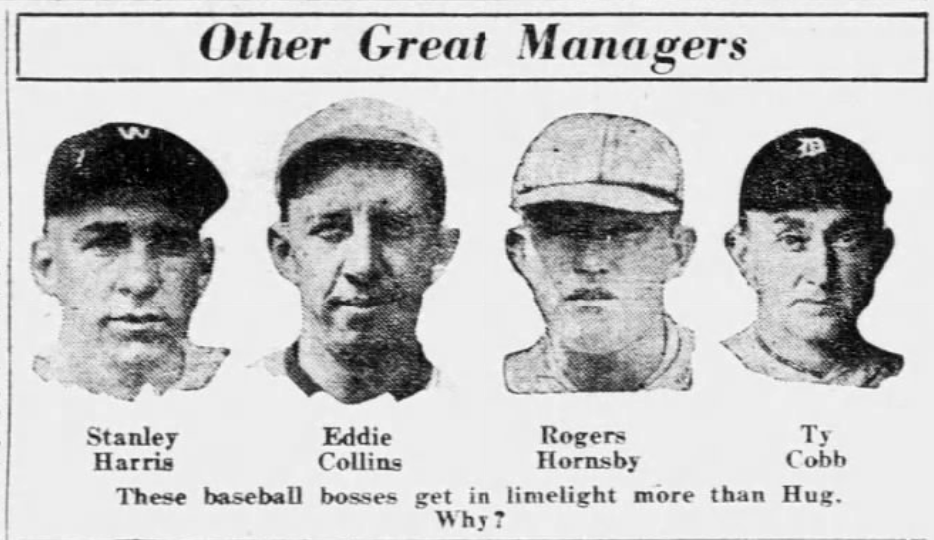
Perhaps that is because some of those managers are players and excitedly pace the side lines and thus are before the eye.
But what we are trying to get at is this: When the Yankees win a series of games—and they won sixteen in a row this season—Huggins seems to be just about as important as the twenty-third vice president of any New York bank.
"The Yankees won a splendid, dramatic but nerve-wracking game yesterday from the Philadelphia Athletics. Waite Hoyt was invincible for six innings, but began to falter in the seventh and Herb Pennock came in to relieve him. The Yankees won, 4 to 3."
There's a typical way of telling of a Yankee victory. Hoyt began to weaken, say, and Pennock came in to save the day.
Who Sent Him?
It was Manager Miller Huggins who saw signs of distress and pulled out Hoyt, but the writers, and no doubt the public, give little Hug no tumble at all when the change in pitchers is made.
It is a fact that, compared with many baseball managers, Miller Huggins's personality is of a rather lifeless tone. He is a small man, not very forceful speaking in his talk, and one who does not try to shove his way to the forefront.
He is not blustery or showy, but, nevertheless, he can do as neat a job of jawing at an umpire as any one in the league if he gets his anger up.
Manager Huggins has been the cause of as many arguments in baseball as any other man identified with the sport. He has been criticized to the degree that criticism became abuse. Huggins took the criticism philosophically.
It always has been a mystery why Huggins is the subject of so much unfavorable comment. His record as manager of the Yankees is one of the best in baseball. This year he assembled a team which threatens to win another championship.
His judicious choice of pitchers day by day has been one of the outstanding features of the race, and his decisions to change pitchers just at the right moment have resulted in many Yankee victories.
It all seems to simmer down to this: When the Yankees are a winning baseball club the players themselves get all the credit, but when the team goes sour, it was Huggins who poured the vinegar into the works.
Baseball Summary
National League
Standings
| Team | W | L | Pct. |
|---|---|---|---|
| Cincinnati | 39 | 26 | .600 |
| St. Louis | 37 | 28 | .569 |
| Pittsburgh | 34 | 26 | .567 |
| Brooklyn | 33 | 29 | .532 |
| New York | 32 | 33 | .492 |
| Chicago | 31 | 32 | .492 |
| Philadelphia | 24 | 39 | .381 |
| Boston | 23 | 40 | .365 |
Yesterday's Results
Brooklyn at New York
Both games postponed (rain).
Boston 4, Philadelphia 5 (Game 1)
| Team | 1 | 2 | 3 | 4 | 5 | 6 | 7 | 8 | 9 | R | H | E |
|---|---|---|---|---|---|---|---|---|---|---|---|---|
| Boston | 0 | 0 | 0 | 0 | 1 | 2 | 1 | 0 | 0 | 4 | 12 | 1 |
| Philadelphia | 0 | 0 | 1 | 0 | 0 | 0 | 0 | 4 | X | 5 | 12 | 1 |
Batteries: Genewich and Taylor; Mitchell and Henline.
Philadelphia 7, Boston 5 (Game 2)
| Team | 1 | 2 | 3 | 4 | 5 | 6 | 7 | 8 | 9 | R | H | E |
|---|---|---|---|---|---|---|---|---|---|---|---|---|
| Boston | 0 | 0 | 0 | 0 | 5 | 0 | 0 | 0 | 0 | 5 | 12 | 1 |
| Philadelphia | 0 | 0 | 1 | 1 | 3 | 2 | 0 | 0 | X | 7 | 15 | 3 |
Batteries: R. Smith, Vargus, Graham, Goldsmith and Gibson; Carlson, Pierce and Henline.
Cincinnati 9, Pittsburgh 1
| Team | 1 | 2 | 3 | 4 | 5 | 6 | 7 | 8 | 9 | R | H | E |
|---|---|---|---|---|---|---|---|---|---|---|---|---|
| Cincinnati | 0 | 0 | 0 | 1 | 1 | 4 | 3 | 0 | 0 | 9 | 15 | 0 |
| Pittsburgh | 1 | 0 | 0 | 0 | 0 | 0 | 0 | 0 | 0 | 1 | 10 | 4 |
Batteries: Mays and Picinich; Meadows, Songer, Adams and Smith.
St. Louis 8, Chicago 7
| Team | 1 | 2 | 3 | 4 | 5 | 6 | 7 | 8 | 9 | R | H | E |
|---|---|---|---|---|---|---|---|---|---|---|---|---|
| Chicago | 3 | 0 | 0 | 1 | 0 | 2 | 0 | 1 | 0 | 7 | 14 | 2 |
| St. Louis | 1 | 0 | 0 | 0 | 0 | 1 | 6 | 0 | X | 8 | 11 | 0 |
Batteries: Jones, Root, Bush, Piercy and Hartnett; Gonzales, Sherdel, Johnson, Hallahan and O'Farrell.
Today's Games
- Philadelphia at Brooklyn
- Pittsburgh at Cincinnati
- Chicago at St. Louis
- Other teams not scheduled.
American League
Standings
| Team | W | L | Pct. |
|---|---|---|---|
| New York | 46 | 20 | .697 |
| Chicago | 38 | 31 | .551 |
| Philadelphia | 35 | 32 | .522 |
| Detroit | 35 | 32 | .522 |
| Cleveland | 35 | 33 | .515 |
| Washington | 32 | 32 | .500 |
| St. Louis | 27 | 40 | .403 |
| Boston | 18 | 46 | .281 |
Yesterday's Results
New York at Boston
Postponed (rain).
Washington 3, Philadelphia 2
| Team | 1 | 2 | 3 | 4 | 5 | 6 | 7 | 8 | 9 | R | H | E |
|---|---|---|---|---|---|---|---|---|---|---|---|---|
| Philadelphia | 0 | 0 | 0 | 0 | 0 | 0 | 1 | 0 | 1 | 2 | 5 | 1 |
| Washington | 0 | 1 | 0 | 1 | 0 | 1 | 0 | 0 | X | 3 | 4 | 0 |
Batteries: Walberg, Pate and Cochrane; Johnson, Marberry and Ruel.
St. Louis 5, Chicago 4 (Game 1)
| Team | 1 | 2 | 3 | 4 | 5 | 6 | 7 | 8 | 9 | R | H | E |
|---|---|---|---|---|---|---|---|---|---|---|---|---|
| St. Louis | 1 | 0 | 0 | 0 | 0 | 0 | 1 | 0 | 3 | 5 | 9 | 0 |
| Chicago | 0 | 0 | 1 | 0 | 0 | 1 | 1 | 0 | 1 | 4 | 9 | 2 |
Batteries: Zachary, Ballou and Schang; Lyons and Grabowski.
Chicago 6, St. Louis 3 (Game 2)
| Team | 1 | 2 | 3 | 4 | 5 | 6 | 7 | 8 | 9 | R | H | E |
|---|---|---|---|---|---|---|---|---|---|---|---|---|
| St. Louis | 0 | 3 | 0 | 0 | 0 | 0 | 0 | 0 | 0 | 3 | 5 | 0 |
| Chicago | 0 | 1 | 2 | 0 | 0 | 3 | 0 | 0 | X | 6 | 13 | 0 |
Batteries: Wingard, Davis, Ballou and Dixon; Thomas and Grabowski.
Detroit 5, Cleveland 0 (Game 1)
| Team | 1 | 2 | 3 | 4 | 5 | 6 | 7 | 8 | 9 | R | H | E |
|---|---|---|---|---|---|---|---|---|---|---|---|---|
| Cleveland | 0 | 0 | 0 | 0 | 0 | 0 | 0 | 0 | 0 | 0 | 5 | 1 |
| Detroit | 4 | 0 | 0 | 0 | 0 | 0 | 0 | 1 | X | 5 | 6 | 1 |
Batteries: Karr, Benge and Lee; Wells and Woodall.
Detroit 7, Cleveland 2 (Game 2)
| Team | 1 | 2 | 3 | 4 | 5 | 6 | 7 | 8 | 9 | R | H | E |
|---|---|---|---|---|---|---|---|---|---|---|---|---|
| Cleveland | 0 | 0 | 0 | 1 | 0 | 0 | 0 | 0 | 1 | 2 | 11 | 2 |
| Detroit | 1 | 0 | 0 | 0 | 1 | 0 | 0 | 5 | X | 7 | 11 | 1 |
Batteries: Buckeye, Shaute and Myatt; Gibson and Manion.
Today's Games
- Boston at New York
- Philadelphia at Washington
- Cleveland at Detroit
- St. Louis at Chicago
PHILS CAN’T PLAY, BUT THEY PAY OWNER
BAKER COLLECTS WELL ON GAMES PLAYED ON ROAD
By WILL MURPHY.
With the National league in the throes of the closest race it has seen in years, the sad case of the Phillies becomes even sadder.
Just one thing the Phils are sure of — a good view of the race at all stages.
Why this consistent collection of stumbling mistakes is allowed to clutter up the league year after year is one of the major mysteries of professional sport. It strengthens the conviction that big league magnates are, after all, very poor business men.
Consider Mr. William F. Baker, president of the Philadelphia National League club since 1913, and its guiding genius today.
That Mr. Baker does not guide his charges anywhere in particular, and that he is not noticeably a genius, has nothing to do with the case. Mr. Baker is a man who has found a good, safe racket that will pay him a sure income and nobody can sniff at that.
Spends No Money.
Compared to the clubs that are trying to produce ball teams, Mr. Baker spends absolutely no money, either for salaries or for new players. He supports no scouting system worthy of the name. He secures his players through the draft and by picking up discards.
He has no chance to obtain a competent college player, for the youths who come into professional baseball from the cloistered shades of our tree-lined campuses know darn well that they won’t get any money out of Mr. Baker.
When, through some freak of the baseball fates, the Phils do become possessed of a topnotch athlete, Mr. Baker trades him to another and more ambitious club—and the Baker bankroll doesn’t suffer by the transaction.
How, one may well ask, does such an organization prosper? Isn’t it necessary to offer the fans some attraction least they stay permanently outside the turnstiles?
Apparently not in Philadelphia. Not many fans pay real money to enter the crumbling and rusted antique which is known as the Phillies’ ball park, bust some do.
Mr. Baker’s real racket is the road and his chief collecting points are right here in New York. No matter how the schedule is arranged, Mr. Baker is assured of eight or ten Saturday and Sunday dates at the Polo Grounds and at Ebbets Field, with one or more holiday dates in the metropolis.
These dates, with the inevitable profitable week-end stands in the west, are just about enough to set the Phillies nicely in the clear for the season. It doesn’t matter much to Mr. Baker that there is no Sunday baseball in Philadelphia. His visiting percentage out of a 40,000 crowd in New York is far more than his home-team cut out of a scant 10,000 in Philadelphia would be.
This year the schedule makers rather rubbed it into Mr. Baker by making him play two of the three big holiday dates at home. But, observe the Baker luck. This year the Sesquicentennial exposition is being held in Philly, and a lot of visitors will want to see a ball game.
Not being well informed, they will go to the Phillies ball park and will pay real money. It ought to be a good year for Mr. Baker, even if the Phils don’t win fifty games all summer.
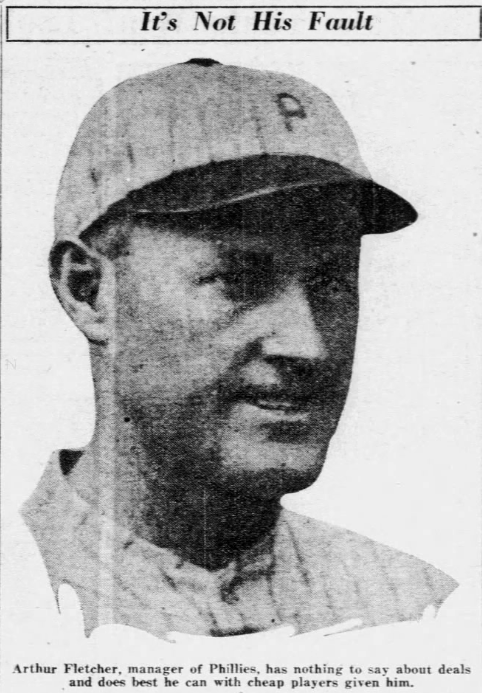
Last year Mr. Baker somehow had a close approach to a ball team, but this season his outfit has relapsed. He has a capable manager in Arthur Fletcher, the old Giant shortstop, and one who can get more baseball out of a troupe of incompetents than perhaps any other manager in the game.
But Fletcher has nothing to work with. Two good catchers, Butch Henline and Jimmy Wilson, some fair pitchers in Clarence Mitchell and Hal Carlson and possibly Claude Willoughby; a first class outfielder in George Harper—and that’s about all.
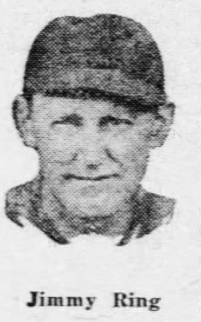
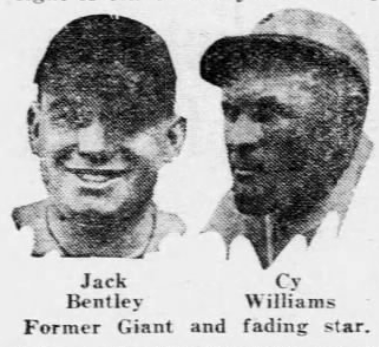
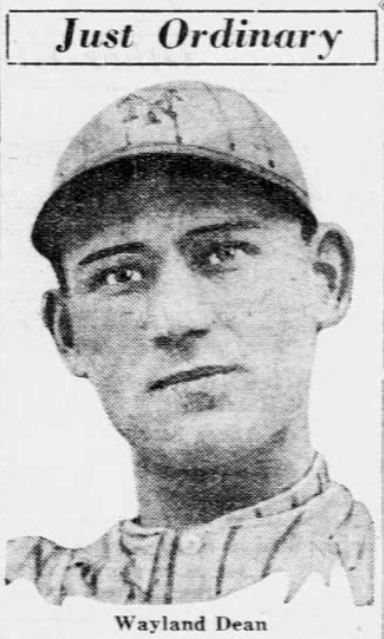
The infield is just terrible and the veteran Cy Williams, once a mighty socker, has definitely faded. Baker gave away his best pitcher, Jimmy Ring, to the Giants last winter for Jack Bentley and Wayland Dean, two whom John McGraw didn’t want any more. Fletcher, incidentally, is said to have had nothing to say about making the trade. Mr. Baker thought it up all by himself.
Bentley at First.
Bentley, a fair southpaw pitcher with the Giants, has been used at first base in the hope that he would become a great hitter. He hasn’t, and still has considerable to find out about the right way to play first base. Dean is just an ordinary pitcher in Philadelphia.
Bad as this ball team is, it has always been able to hit. Players who can sock the onion and do nothing else seem to head for Philadelphia instinctively. The short right field wall at Mr. Baker’s decrepit little park helps these clouters. As a club, the Phils hit an even hundred home runs last year. No doubt most of them were long flies that would have been caught in a life-sized enclosure.
WHY DIDN’T THEY THINK OF BAKER IN FIRST PLACE?
When the plans for the Sesquicentennial in Philadelphia were under way, the august committee members decided that all the big athletic championships should be played in Sleeptown this year. The world series would add a doggy tone to the affair, it was decided, just like that.
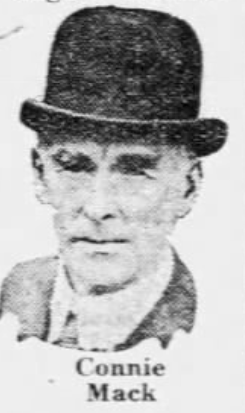
The committee was even about to approach Connie Mack with an offer of unlimited financial support to buy players so as to make the pennant sure, when somebody put them wise that baseball isn’t run quite that way.
“Now, if they’d only been let go to Bill Baker,” suggested a local wag, “he could have used the money—any player he’d buy would be better than the ones he has.”
MURPHY.
WOT’S BASEBALL WITHOUT JOKE NOW AND THEN?
By JACK FARRELL.
Every once in a while there arises in the major league baseball realm humorous incidents which tend to break the long, tiresome monotony of the everyday pennant grind and afford welcome diversion not only the players but for the fans as well.
Jimmy Cooney pulled a practical joke on Catcher Mickey O'Neil and the entire Brooklyn baseball team over in Flatbush during the recent Chicago series that the fans are still talking about.
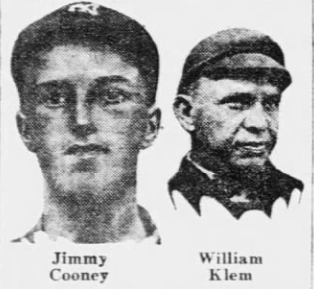
James did his stuff during the sixth inning. With one out, a runner on second and the author of the hoax on first, George Kelly forced James at second and the runner on second advanced to third. Instead of cutting across the field to the Cub dugout, Jimmy jogged very slowly to third practically unnoticed.
Without warning he made a bee line for the plate and when O'Neil looked up and saw him coming he doffed his mask and ran up to tag him, ball in hand. Just as Mike was about to put the ball on him Jimmy stopped short and swerved toward the Cub dugout with O'Neil in hot pursuit. Mickey put the ball on him in the dugout.
That, according to O'Neil’s way of thinking, was the third out. He unbuckled his chest protector and shin guards and tossed them on the field with a triumphant gesture.
But there was one man in the park who knew what had been pulled. That was Manager Joe McCarthy of the Cubs, who was coaching at third.
“What’s this?” shouted Joe, as he summoned all three arbiters to his side. “Why, there’s only two out.”
Mr. Klem scoffed at the idea. “Three out,” he thundered, as only Mr. Klem can thunder.
Mr. McLaughlin, who officiated at third, finally saw the light.
Aw, Kick It, Willya!
By PAUL GALLICO
The Column's investigation of the games of the streets of New York has been sidetracked for a while due to the importance of professional boxing contests, baseball, and so on. However, a brief lull gives us the opportunity to list further the quaint games that flourish in the side streets between visits of the minions of the law. Due credit must be given to Mr. Grant Powers, whose indefatigable research has made possible this series. Mr. Powers has just returned from a tour of the side streets, where he reports the playing of a game known as "Kick the Wicket."
Kick the wicket depends a great deal upon the mis-en-scene, the milieu, the location, as it were. Mr. Powers reports that the best games took place near drug stores that boasted large plate glass windows, or Chinese laundries, or houses with large porches and iron railings. The plate glass windows have no essential part in the pastime, and yet they add spice and thrill to the contest. Should you propel the wicket through one of them, the game immediately becomes complex and scatters itself all over the neighborhood. The contest then is in trying to find the player who kicked the wicket.
The wicket is a stick, about a foot and a half long, that is leaned up against the curb stone. The gang splits into two sides, some one's cellar door becomes one base, a fire hydrant another, one side goes to bat and the other takes the field. The batsman steps to the wicket, places his foot under it and kicks it. If it is caught, the side is out. If it is fumbled, the fielder still has a chance to seize it and rush for the home plate and touch it before the kicker has reached base. But once the batter is on base the next man is up.
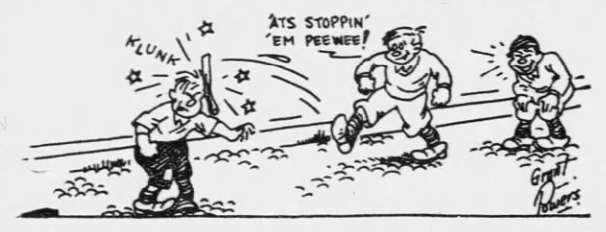
Aha! There is now a man on base. The next batter steps to the wicket and all the fielders move in close. A tense moment is at hand. The kicker places his trusty toe beneath the wicket. The runner on base lights out for second. A fielder swoops in. If he can pick up the wicket and touch the home plate with it the runner will be out. But see, how subtle is the batter. As the intrepid fielder stoops over to pick up the stick he lets fly and kicks him right square in the snoot. Whoopee, what fun! Bring on the next victim.
The porch comes in handy if you have an accurate toe. Kick the wicket up onto some lady's front stoop and it's good for a home run. By the time the mob gets the iron gate open and files up the stairs and the lady comes out and raises hell about it and picks up the wicket in a tantrum and pegs it across the street into an area-way the runner has time to trot the bases with very much the pace Mr. Ruth employs after he has pasted one for keeps. No penalty is imposed on the lady, because she wasn't playing anyway.
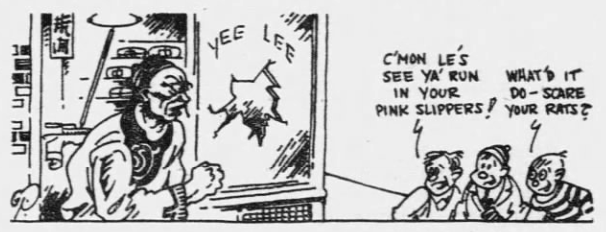
The real joy of the game comes when the stick loops earth-ward and bops one of the kids on the noodle. And, of course, the great event of a lifetime is when you go through the window of the Chinese laundry. For some reason or other, when the injured window is owned by an oriental, rather than an occidental, the thing is supposed to be much spicier. The feller that runs the drug store—if he catches you, not so good. The Chinaman not only looks funny when enraged, but when it comes right down to it, it is found that he has gentleness in his heart.
Kick the wicket is not yet incorporated, but a rules committee has been appointed and will meet in Washington in 1927 to standardize the size of the wicket and the cost of plate glass windows.
ADVERTISEMENTS